

A dripping cabinet, a musty smell near the sink, or a stain spreading across the ceiling can look like a simple kitchen problem at first glance. But many of the issues homeowners try to fix inside the kitchen actually start somewhere else entirely, from the roof overhead to the pipes buried in the yard. Chasing the wrong source wastes time and money, and it can let the real damage get worse while you scrub, repaint, or replace cabinets that were never the problem. This guide walks through the outside culprits most likely to be masquerading as kitchen trouble, so you know where to look before you call anyone out.
Ceiling Stains That Start on the Roof
A yellow or brown ring on the kitchen ceiling almost always means water is getting in somewhere above, and that somewhere is rarely the kitchen itself. Shingles that are cracked, lifted, or missing near a vent stack or chimney can let water travel along rafters and show up several feet away from the actual entry point, which is why the stain often appears directly over the stove or sink even when the damage originates elsewhere on the roofline. This kind of misdirection is exactly why experienced roofers trace leaks from the attic down rather than guessing from the ceiling up.
If the stain grows after every rainstorm or seems to spread rather than dry out, that is a strong sign the source is still active and worsening. Ignoring it typically means replacing drywall, insulation, and possibly cabinetry later, all of which cost far more than addressing the roof issue early.
- Check the attic for daylight, damp insulation, or dark streaks on the underside of the roof deck
- Look for curling, cracked, or missing shingles directly above the stained area
- Note whether the stain appears or worsens only during or after rain
- Inspect flashing around chimneys, vents, and skylights, since these are common leak points
Warm Kitchens and Uneven Cooling in Summer

If the kitchen feels noticeably hotter than the rest of the house, especially in the afternoon, the cause is often not the oven or the window but the equipment trying to condition the whole home. Ductwork that is undersized, poorly balanced, or leaking in the attic or crawlspace frequently shortchanges the room farthest from the air handler, and kitchens with lots of appliances and windows tend to draw the short straw. A simple duct inspection and airflow test can reveal whether the problem is distribution rather than capacity.
Routine AC service can catch refrigerant levels, dirty coils, and blower issues before they turn into a full system breakdown during the hottest part of the year. Many homeowners wait until the kitchen becomes unbearable to schedule a checkup, but a seasonal tune-up usually costs far less than an emergency repair call in July. If the system is old enough that repairs keep piling up, a new AC installation may end up being the more cost-effective choice over squeezing another summer out of a failing unit.
- Compare kitchen temperature to other rooms at the same time of day
- Check if vents in the kitchen are blocked by cabinets or furniture
- Ask whether ductwork was resized when any home additions or remodels happened
- Look for visible gaps or disconnected sections in accessible duct runs
Persistent Odors Tied to Yard Plumbing
A sour or sewage-like smell that keeps returning to the kitchen, even after the drain has been cleaned and the garbage disposal run, often points to a problem well outside the walls. The pipe connecting your home to the municipal sewer main, known as the sewer lateral, can crack, shift, or become blocked by tree roots over time, and when it backs up, odors and slow drains tend to show up first at the lowest or farthest fixtures, which is frequently the kitchen sink. A camera inspection of this line is the most reliable way to confirm whether the issue lives underground rather than under your sink.
Older homes with clay or cast iron lateral pipes are especially prone to this kind of deterioration, and the repair often requires excavation if the damage is severe. Catching it early through professional inspection can mean a simpler repair rather than a full yard dig.
- Notice whether the smell worsens after heavy rain or when multiple fixtures are used at once
- Watch for gurgling sounds coming from the drain when other plumbing runs
- Check for unusually lush or soggy patches in the yard, which can indicate a leak
- Ask a plumber about a camera inspection if odors persist after cleaning
Drafts and Temperature Swings Near Exterior Walls
If one corner of the kitchen always feels colder in winter or hotter in summer, the problem may not be the room at all but the exterior wall or window assembly it sits against. Gaps in siding, deteriorated caulking, or a poorly sealed exterior door near the kitchen can let outside air bypass the insulation entirely. This is especially common in kitchens that sit above or beside an older porch, where structural settling can pull trim and siding away from the house.
When the drafts are significant, no amount of adjusting the thermostat solves the problem because the air is leaking around the system rather than through it. A heating and air conditioning company can perform a blower door test or thermal scan to pinpoint exactly where conditioned air is escaping, which is far more precise than guessing based on where you feel a breeze.
- Hold a lit candle or incense stick near window and door frames to spot airflow
- Check caulking and weatherstripping around any exterior kitchen doors
- Inspect the area where the kitchen wall meets the roofline or an attached porch
- Look for cracked or separated siding near the kitchen’s exterior corners
Sagging or Shifting Floors Near an Attached Porch
A kitchen floor that feels slightly uneven near an exterior wall is sometimes blamed on the subfloor or old flooring material, but the real cause can be structural movement coming from an attached porch or entryway. When a porch foundation settles, heaves, or rots at the ledger board where it connects to the house, that movement can transfer into the adjoining kitchen framing and show up as a subtle slope or bounce in the floor. This is more common in homes where the porch was added years after original construction and tied into the structure imperfectly.
Addressing porch repair promptly prevents the shifting from spreading further into the house and affecting doorframes, cabinetry, or flooring near the shared wall. A structural contractor can usually tell within one visit whether the porch connection is the actual source of the kitchen’s unevenness.
- Check for gaps forming between the porch and the main house exterior
- Look for cracked drywall or trim near the kitchen wall closest to the porch
- Notice if doors near that wall have started sticking or no longer latch properly
- Inspect porch posts and footings for rot, rust, or visible settling
Musty Smells and Moisture From Crawlspace or Foundation Issues
A persistent musty odor in the kitchen that does not trace back to the trash or the drain often comes from below the floor rather than inside the room. Poor crawlspace ventilation, a missing vapor barrier, or grading that directs rainwater toward the foundation can all push moisture upward into the kitchen subfloor, especially in homes with wood flooring over a crawlspace. Over time this moisture can warp flooring, loosen tile, and feed mold growth that is only noticeable by smell long before it is visible.
Fixing the grading or adding a vapor barrier outside is usually far more effective than any cleaning done inside the kitchen itself. If the odor returns after every rain, it is worth having the crawlspace and exterior drainage checked before replacing any flooring.
- Check that gutters and downspouts direct water at least several feet from the foundation
- Look at crawlspace vents for blockages or signs of standing water
- Note if the smell intensifies during or right after rainfall
- Inspect flooring for soft spots, cupping, or discoloration near exterior walls
Cracked or Dulled Countertops From Sun and Heat Exposure
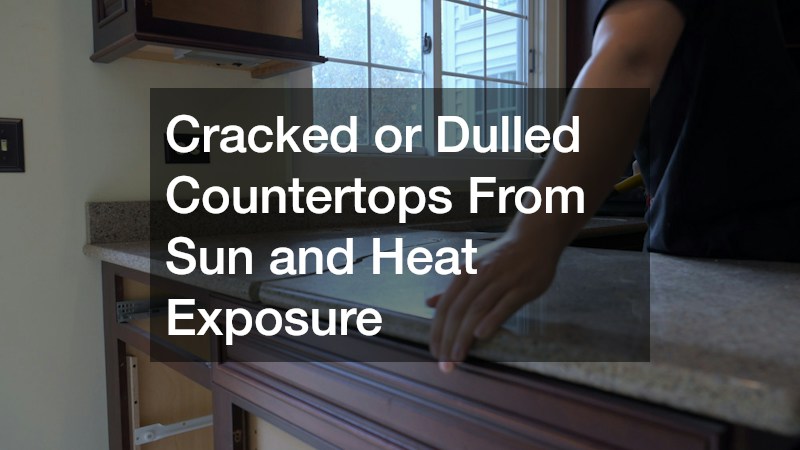
Countertops that develop surface dullness, small cracks, or discoloration near a window are sometimes blamed on cleaning products, but prolonged sun exposure and heat radiating through glass can be the real culprit. This is particularly noticeable with natural stone, since granite countertops can fade slightly or develop micro-fractures over years of direct afternoon sun combined with temperature swings from a nearby window or exterior door. Sealant also breaks down faster in sun-exposed areas, making the surface more porous and prone to staining.
Addressing the window itself, through better glazing, films, or exterior shading, protects the countertop far more effectively than switching cleaning products. If the damage is already done, resealing is a simpler fix than replacing the surface entirely.
- Check whether damage is concentrated near windows or skylights that get direct afternoon sun
- Consider UV-blocking window film if fading is an ongoing issue
- Reseal natural stone surfaces annually in high-exposure areas
- Use blinds or curtains during peak sun hours to reduce heat transfer
Cabinet Warping Linked to Humidity and Exterior Ventilation
Warped cabinet doors or swollen cabinet boxes are often treated as a manufacturing defect, but humidity control problems tied to the exterior of the house are frequently the actual cause. If a kitchen exhaust fan vents improperly, or if exterior humidity is seeping in through poorly sealed windows, the moisture can be absorbed by wood over time, causing doors to stick, swell, or separate at the joints. This is especially common in kitchens with custom builtin cabinets, since the tighter construction and built-in fit leave little room for wood movement before doors stop closing properly.
Before assuming the cabinets themselves are defective, it is worth checking whether the kitchen’s ventilation and exterior sealing are doing their job. Correcting the humidity source often stops further warping, even if the existing doors need minor adjustment or refinishing.
- Confirm that the kitchen exhaust fan vents outside rather than into the attic
- Check for condensation on nearby windows, which signals excess humidity
- Inspect cabinet joints for swelling, separation, or sticking doors
- Use a hygrometer to monitor kitchen humidity levels over a week
Kitchen problems rarely stay contained to the kitchen, and treating only the visible symptom often means paying for the same repair twice. Whether the trail leads to the roof, the yard, an attached porch, or the ventilation system, tracing the issue to its actual source saves money and prevents repeat damage. Start by observing when and where the problem worsens, then bring in the right specialist for that specific system rather than guessing. A little detective work now can spare you a much bigger renovation later.